|

Â
Question for you... what do 'Tango & Cash', 'In Her Shoes' and 'Tremors' all have in common? Well apart from the fact they all feature in my DVD collection (alhough let me assure you âIn Her Shoesâ is more down to my wife than me!) they also, and more relevantly, feature stunts or fight coordination by Jeff Imada. And whilst Imada may not be a name you instantly recognise, you have certainly seen his work.
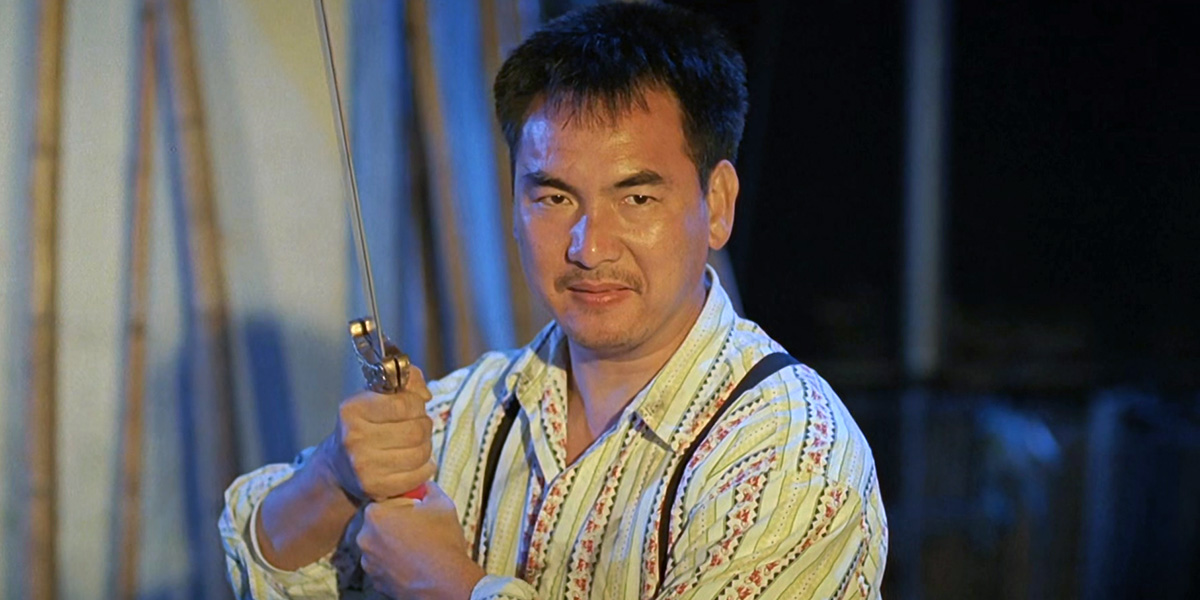
Let me quantify that statement. A friend of mine in the States was recently sat watching TV. Uninspired by the latest reality TV show he starts channel hopping. First channel he switches onto - âBig Trouble In Little Chinaâ, featuring a quick appearance of stunt man, actor and fight coordinator Jeff Imada. Turns over the channel to a Master Card advert which happens to once again feature Jeff Imada.  Turns over again, 'Heroes'. There he is again - Jeff Imada. Another channel. '24'. Jeff Imada. And that was just one advert break. But then again when your resume includes over 150 films and TV shows chances are most days at least something that Imada worked on will be screening.
Jeff Imada was born and raised in Inglewood, California, USA, where he began studying martial arts at the age of fifteen. While in college studying medicine, he started working as a movie "extraâ which lead him through to stunt work and eventually some years later fight and stunt coordination. Today Imada is a member of highly regarded US stunt team "Stunts Unlimited" and one of the most respected men in the industry.
In the past 25 years alone he has worked alongside directors such as John Carpenter, David Fincher, The Coen Brothers and Tony Scott, and choreographed, worked with or appeared alongside Mel Gibson, Brad Pitt, Matt Damon, Brandon Lee, Nicolas Cage, Steven Seagal, Clint Eastwood, Stallone, Eddie Murphy... the list goes on. And on. Last year I sat down with Imada to talk about his career so far.
Â

Â
Far East Films: When was the defining moment where you decided you wanted to do this for a living... when DO you say I want to throw myself off high buildings for a living?
Jeff Imada: Ever since I tripped off that building as a kid⌠(laughs) Iâve always loved athletic things that involved movement, being physical. I started my life studying medical science and heading into a career in that field through high school and college. But when I was in college and getting closer to graduating a friend off mine sort of got me involved in the movie industry one summer. I got to watch a lot of the stunt guys doing their thing and I thought it looked pretty cool to do. I had an interest in the acting, which stemmed from back to junior and high school doing the stage aspects and on top of that my father and grandfather were photographers so without knowing it I was kind of influenced from the start to get involved in the industry.
FEF: Did you have any specific inspirations growing up?
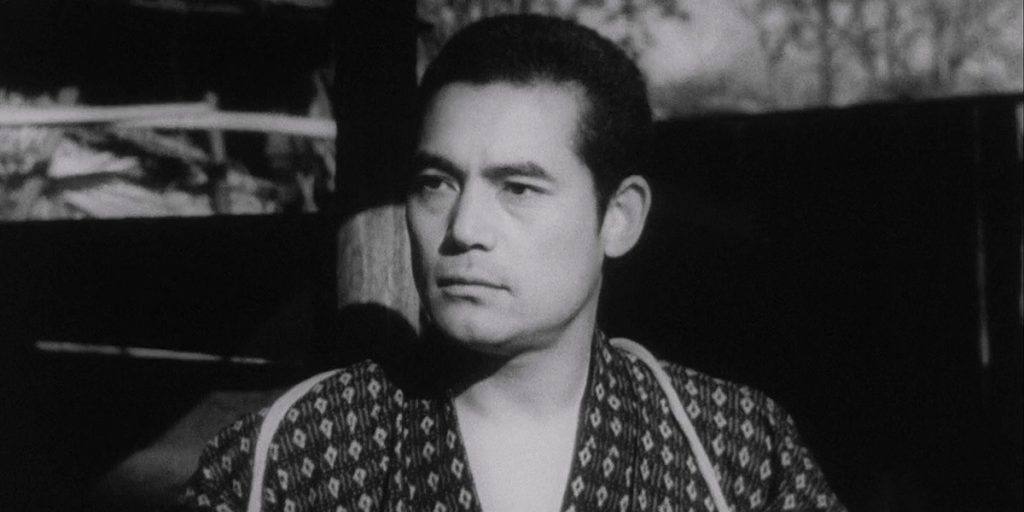
JI: Bruce Lee obviously. But also I grew up with John Wayne movies and, in another respect, Fred Astaire & Gene Kelly because itâs all movement, movement in a very accomplished manor. I really enjoyed watching those films. A lot of the old Hong Kong movies as well - the Samurai films, 'Yojimbo' and 'Seven Samurai' were all an influence to me. All of these different films and different styles have been synthesised into bringing out what you see on in my work on the big screen today.
I wanted to dig a bit further into Imadaâs background. After all he didnât start his career looking towards movies. After all whilst at El Camino College and UCLA, he majored in pre-med and minored in music. Neither of which says stunt man or fight coordinator.
FEF: How does your background inform your work?
JI: I have a music background so I incorporate music, rhythms & timing into what I do. Itâs all utilised for my action pieces. Keeping true with the characters and making sure whatever they do as the character is key. I need to know that Iâm not creating something that will take the audience out of the experience. It's really important... any type of action that the characters are doing is, to me, another way of doing dialogue. So if you want to stray true to the characters, it goes hand-in-hand with verbal dialogue.
Â

Â
Imada nails it for sure. After all, how many times have we laughed at Steven Seagal who, with his very grounded fighting style, occasionally ends up jumping off walls and performing kicks men half his age would struggle with. Imada continuesâŚ
JI: There was actually a project with Steven that I was called about. But this time they wanted Steven to do some wire work. Knowing Steven I asked them "Does Steven know that?". [Imada laughs remembering back to the conversation] Talking to them some more I wanted to know in what manor the wire work was going to be used. Was it to enhance something or is it to defy gravity, because I donât know if the audience is going to accept that otherwise! And on top of that I donât even know if Steven WANTED to do that. I understand that the studio thinks itâs cool to do all of that stuff because itâs the trend and all but certain people are known for certain ways of fighting so to take it into a different context when itâs not a fantasy type film... you have to watch that line of believability!
FEF: Whatâs your take on the advent of Wire Work in US and mainstream films?
JI: Donât get me wrong, I can appreciate 'The Matrix' style wire work and special effects, but in the right place. For a while the audience was burnt out with this technique - movies, TV, it was everywhere... Itâs funny but before 'The Matrix' I was trying to convince people to use wire work in scenes, and theyâd look at me and say âWires? What? What are you talking aboutâŚâ. After 'The Matrix' comes out, everyoneâs asking me âCan you do any of that wire stuff!â Thereâs an interesting story I was told by Woo Ping from the filming of the movie 'Sand Pebbles'. Loren Janes [legendary stunt and action performer] went to over to Asia to work on the film and, according to Woo Ping, it was HIM that introduced wire stuff and the mini trampoline to them!!! Before 'Sand Pebbles', the Chinese never did that.  He showed them a little wire set up with piano wire and also mini tramps... so itâs interesting that all the Hong Kong acrobatics and wire stuff came from him, from that movie. It was the first time they ever did it. He took that to Hong Kong, which in turn created an industry and only now that has come back full circle.
On the subject of Seagal, it wasnât long before we ended up off topic again as I recalled a conversation with Cage Rage and Pride Fight Commentator Stephen Quadros who once told me a great story about Seagal and how, on meeting people for the first time, he has a special trick where he likes to sneakily kick you in the groin. Knowing that Imada and Seagal have a history together I just had to pose the question on the validity of the story.  JI: Yeah thatâs kind of true [Imada shares a sly laugh before continuing] Stevens a funny character... Iâve known him a long time and heâs pretty funny that way. When guys work with him for the first time I tell them when ever your meeting Steven as a stunt guy you need to work out. They always look at me as if to say âReally?â and I just say work out, trust me on this because maybe heâs horsing around but if you put your guard down heâll nail you and when he does youâll know it!
FEF: Obviously you seem to have an excellent relationship with John Carpenter, as youâve worked on a quite a few of his films. What is it about him that keeps you coming back for more?
JI: He keeps asking me back! Which is nice... I appreciate that! Johnâs a great guy and Iâve been very fortunate to work with him. Iâm a fan as well... in college I remember watching previews of 'The Thing' thinking "Wow that looks like a cool film". I thought Iâd love to meet him one day... so years later meeting John, working with him on 'Big Trouble In Little China' and to play a part in the film was awesome.
Â

 Like Imada I have always been a massive fan of Carpenter. 'Big Trouble In Little China' is one of my favourite Carpenter films. That and 'They Live'. In fact the fight between Keith David and Roddy Piper in 'They Live' is, for me, by far one of the greatest Man-o on Man-o fights I have ever seen. It just so happens that the man who choreographed this was sat right in front of me.
FEF: You choreographed the infamous fight in 'They Live', which is surely my favourite fight scene of all timeâŚ
JI: I love that fight. You know that the version you see now has at least another 50 seconds cut from it. At least. Roddy and Keith did a great job. I have been fortunate that since 'Big Trouble' John has asked me to coordinate every one of his projects, but to be involved in 'They Live' was especially great because he called me up and said âHey young man, Iâve got a script for youâ, [Laughing] John always calls me "young man" even though weâre not THAT far apart. He started talking about the old John Wayne films with the big long fights, he wanted to recreate that with two big guys going toe to toe... So I take a look at the script and there was something about the glasses being thrown down and then the page says âThe Fight beginsâ. I turn the page it says âThe Fight Continuesâ. I flip the page again âThe Fight Still Continuesâ. After a few pages it says âThe Fight concludesâ! John looked at me and said âYou know what to do so create it for me!â and that was it. âShow me what you gotâ.
FEF: Did Carpenter want anything specific in the scene?
JI: He only asked me to include three things, three wrestling moves. A suplex, a clothesline and a sidewalk slam. Other than that I had free reign so it was a great opportunity to create an amazing scene where two big guys fight for six minutes straight. John allowed me to add the character moments, moments about the glasses, their friendship... to create the whole scene.
FEF: What was Carpenterâs reaction when he saw what you put together?
JI: John liked what I did, the highs and the lows of the character, the extra dialogue I threw in, the character moments which it made it more believable, so at the end when Keith finally puts on the glasses you really buy it.
FEF: How long did you have to film the fight?
JI: Not long. Two, two and half days. We had blocked it out and rehearsed it at Johnâs house in his backyard! The actors did everything themselves. With Roddy we had to tone him down a little because heâs used to doing fights BIG for a live audience so we had to bring him in a bit so it wasnât so unbelievable. We shot the fight in a parking lot. But the whole place was padded, which people donât realise. So if the actors fell down or into something they had a soft landing that wasnât on concrete, just made to look like it! It was very subtle so no one has ever picked up on it!
FEF: So was âThey Liveâ the first time a director had turned around to you and said âHereâs five minutes of screen time... fill itâ?
JI: Yeah mostly. Possibly this happened a little more when I was doing TV work but itâs very different time-wise. For me 'They Live' was great because, at the end of the day, I create violence for a living. I often kid the guys saying "all we do is make violence for a living". We are not there to help, we're always there to hurt! I never get called to chorograph a romantic love scene!
Â

Â
Another interesting fact about Jeff Imada is that he, along with such industry luminaries such as Vic Armstrong, Glenn Wilder and David Ellis, has served on the Blue Ribbon committee for the âstunt OSCARSâ, The Taurus Awards. The Taurus Awards were set up primarily to honour the movie industry's unsung heroes - the world's best stunt professionals. Something the OSCARâS has so far failed to do. Â
FEF: What are your thoughts on the academies failure to recognise stunt and action performers?
JI: Itâs interesting when you look at the awards. They acknowledge every other department - hair, make-up, CGI, technology advancements, shorts, but they donât acknowledge the stunt people, stunt coordinators or the action people and yet itâs an integral part of a lot of these movies. Itâs been brought up with the head of the academy and itâs been passed to me, second hand so Iâm not sure if itâs absolutely true or not, but it's been stated to me that in conversation the guy said âyou guys are not and will not ever be considered for the academy awardsâ. But everyone else is acknowledged so why not us?
FEF: Was this something you have tried to rectify with your involvement with the Taurus awards?
JI: It's important to acknowledge people for their accomplishments but the concern is you also donât want people to take undue risks to get that accomplishment or award. To do it to a high level is great and to be acknowledged for that even better. A second unit director is given a whole unit to shoot and direct, we are involved with the actors... creating scenes that fit in with the characters, hand-in-hand with telling the story in a physical manor. You're creating something every time you're on set. With the actors. The camera angles. Now it has been said to me that there is an argument to say that we are just management, that we donât do anything creative so why should you be acknowledged? Well if thatâs the case then why do these same guys ask us how to do this or that or ask us what we should do here or what the character would do or how they would react?
FEF: Do you think this will change?
JI: I do. In the past we were the silent minority, hired to make the actors look good. Very much in the background! They didnât want to acknowledge it was us, the stunt men, because they could say it was all them and the actor would look better because of it, but the transition is happening now and the actors are starting to acknowledge the stunt people more, our impact, importance and how we enhance what they do.
Imada has seen the industry change dramatically from when he started back in the early eighties. From the heights and boom of the cheaply made Cannon films of the 80âs through to wire heavy work of the 'The Matrix' and the advent and proliferation of CGI. Most recently the industry has gone full circle, turning back to the more realistic hardcore action of 80âs Hong Kong.Â
FEF: 'Ong Bak' has taken the action industry in a dramatically different direction., making things more real again. Whatâs your take on this most recent evolution?
JI: When that film first came I remember watching it thinking âwow, thatâs refreshing!â. It's back to reality-based physicality of movement which is what inspired me in the first place... that combination between Bruce Lee and Jackie Chan.  Jaa has an intensity, an acrobatic ability and not having wires involved makes you really appreciate us as a human species and what we can accomplish. Itâs just awesome! I met Tony, heâs a really nice, humble guy...
Â

Â
And with that my time was very much up. Jeff Imada turned out to be truly one of the easiest and most enjoyable people I have ever interviewed. With a wealth of knowledge gained from his experiences both in front and behind the camera, his twenty plus years working in the industry and over 150 credits to his name, I could have spent a whole day with him and still not scratch the surface of his illustrious career.  What started as a press interview, quickly turned into a conversation about films not unlike those I would have with friends I have known for years... although I guess the real difference being that none of them have worked on 'They Live'!
For more information on The Taurus Awards, check out www.taurusworldstuntawards.comÂ
Â
Phil Hobden
Phil Hobden is an independent filmmaker and freelance writer. His second film, 'Ten Dead Men', is now available to buy from Amazon.co.uk and he is currently developing his third feature film through his company Modern Life?, as well as writing for various websites and magazines including Combat Magazine and Impact. For more on Phil Hobden, check out www.philhobden.co.uk or www.mod-life.net.
Â
Far East Films would like to thank Jeff Imada and Phil Hobden |